Day 1–2: Define scope and success metrics
A useful audit starts with focus. Pick one primary journey — onboarding, checkout, search-to-purchase, or support request — and define what 'better' means.
- Agree on business KPIs (conversion, drop-off, time-on-task)
- Identify primary personas and devices
- Collect analytics baselines and known complaints
Day 3–4: Heuristic review and friction mapping
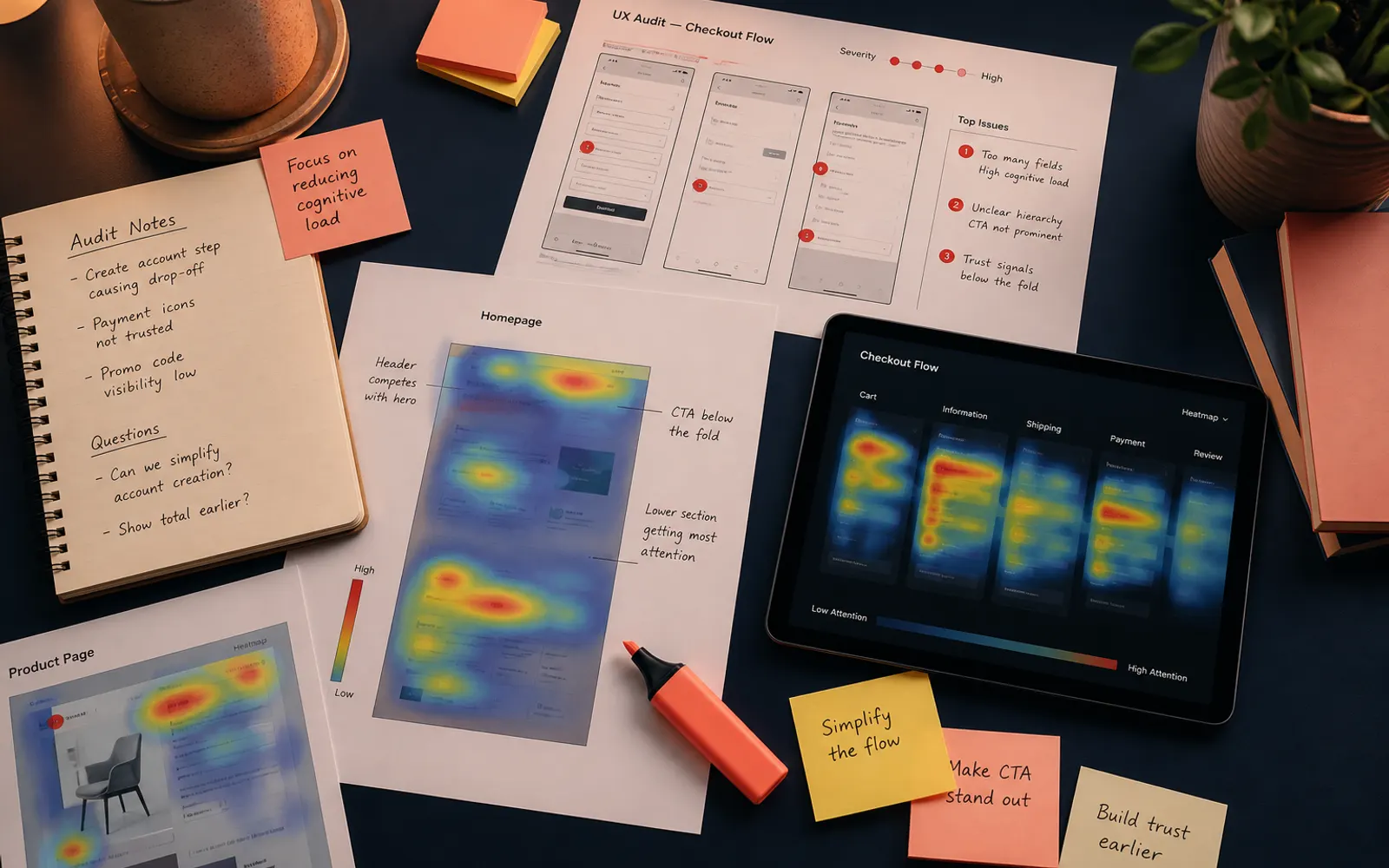
Walk the journey screen by screen. Score issues by severity and frequency. Capture evidence with screenshots and short notes — not vague opinions.
- Usability heuristics (clarity, feedback, error prevention, consistency)
- Accessibility spot-checks on critical controls
- Competitive comparison for the same user goal
Day 5: Synthesize into a prioritized roadmap
Stakeholders do not need a 40-page PDF. They need a clear action plan: quick wins this sprint, structural fixes next quarter, and open questions needing research.
- Top 10 issues with expected impact
- Recommended redesign directions with rough effort
- Optional prototype of the highest-leverage flow
What great audits avoid
Avoid endless findings without prioritization. Avoid redesign suggestions detached from business goals. Avoid language that blames teams — frame issues as opportunities with evidence.
Key takeaways
- Scope one journey tightly for speed and depth.
- Score issues so teams know what to fix first.
- Deliver a roadmap, not just a critique.
Need help applying this?
Let's turn these ideas into a clear UI/UX plan for your product.
Book a Consultation